


Just opened a box of Flinch and are ready to play? This guide skips the confusing rulebook and provides clear instructions to start your first game in under 10 minutes. To know more, check out megaxwin
The Flinch card game comes down to a single, simple objective: be the first player to play all ten cards from your personal Flinch Pile. Some rule versions refer to this as the Stock Pile, but emptying it is the only way to win. Every move you make is geared toward playing the top card of that pile to declare victory.
The game’s unique 150-card deck is what makes it so engaging. Inside, you’ll find ten complete sets of cards, each numbered 1 through 15. This creates a dynamic race where all players build on shared piles in the middle of the table, constantly looking for an opportunity to play the next card in a sequence.
How to Set Up a Game of Flinch in 3 Easy Steps
Getting the cards on the table is quick and simple. After choosing a dealer, just follow these three steps.
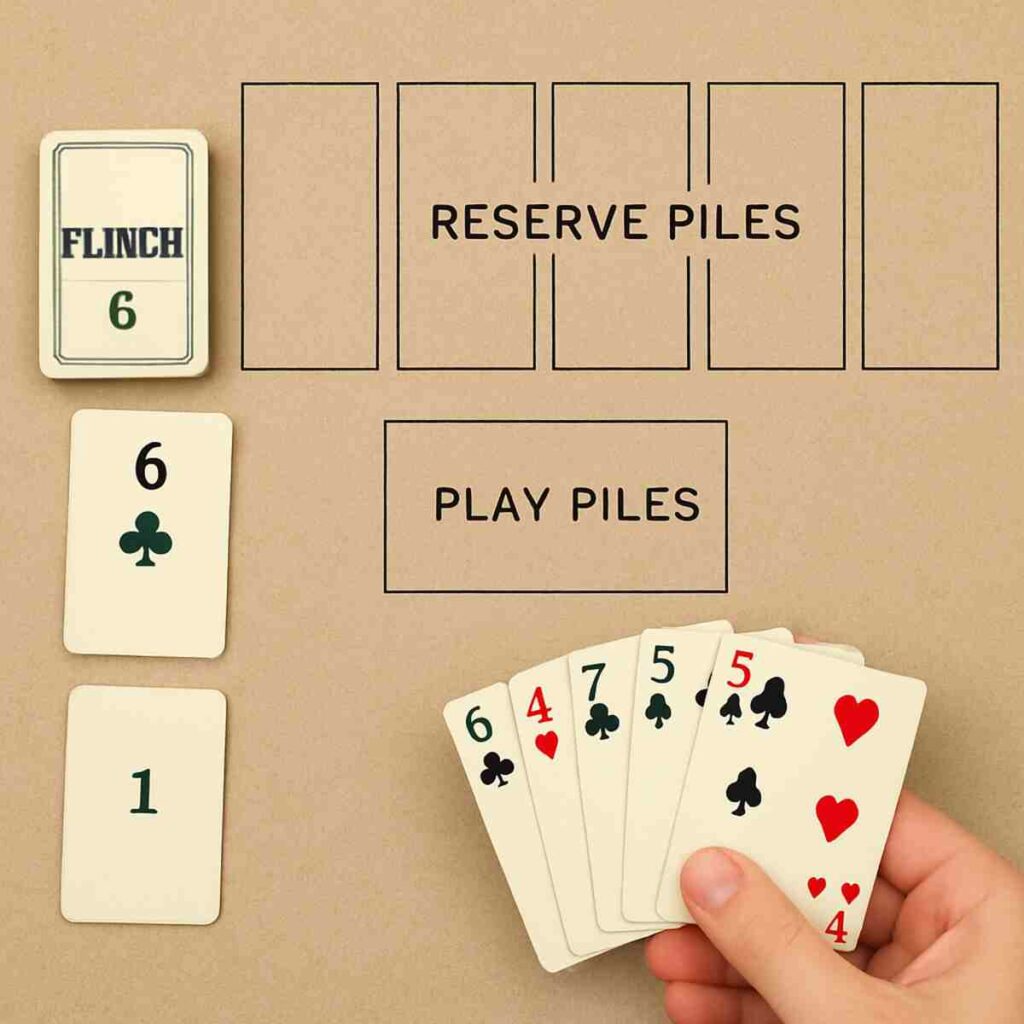
- Shuffle and Deal the Flinch Piles: First, thoroughly shuffle the entire 150-card deck. The dealer gives each player a stack of 10 cards, dealt face-down. This is your personal Flinch Pile. Once everyone has their pile, each player flips the top card face-up so it’s visible. This is your first potential play!
- Deal the Hand: Next, the dealer gives each player five cards to hold. This is your starting hand, and you’ll use these cards to make plays during your turn.
- Create the Draw Pile: Finally, place the large stack of remaining cards face-down in the middle of the playing area. This becomes the main Draw Pile, which players use to refill their hands throughout the game.
With the piles dealt and the deck in place, your table has all the key ingredients for a game: a winning pile, a hand to play, and a central deck to keep the action going.
Your Play Area Explained: The Four Zones You Need to Know
With your cards dealt, your table is now a strategic map. Understanding the different zones is the key to playing confidently. The empty space in the middle of the table is where all players will build shared Play Piles. Think of this area like a group game of Solitaire; anyone can start a pile with a “1” card, and from there, players compete to build each pile up in sequence to 15.
Your personal area contains two things you just set up: your Flinch Pile and your hand. The face-up card on your 10-card Flinch Pile is your number one priority. Your hand of five cards, on the other hand, acts as your toolkit, giving you flexible options to make plays and help clear your Flinch Pile faster.
The last, and most important, part of your personal area is for your Reserve Piles. In the space between your Flinch Pile and the central play area, you will create your own personal discard piles. You can have up to five of these Reserve Piles, which serve as a strategic holding zone for cards from your hand that you can’t play immediately but want to use on a future turn.
Keeping these areas distinct is crucial. You have the shared central Play Piles that everyone plays on, and then your personal zone with your Flinch Pile, hand, and Reserve Piles.
How to Play Your Turn: A Simple 4-Part Sequence
A turn in Flinch is a fast-paced flurry of activity where your goal is to play as many cards as possible. The central Play Piles are where the action happens. Any player, on their turn, can start a new Play Pile by playing a “1” card into the center. From there, that pile must be built up in order: 2, 3, 4, and so on, all the way to 15.
Your turn always follows a simple priority system. As long as you have a valid move, you can keep playing cards, but you should always check your available plays in this specific order:
- 1. Play from your Flinch Pile (TOP PRIORITY): If the top card of your Flinch Pile can be played onto a central Play Pile, play it! This is how you win the game.
- 2. Play from your Hand: Use the cards in your hand to start new “1” piles or continue building on existing ones.
- 3. Play from your Reserve Piles: You can also play the top card of any of your personal Reserve Piles.
Once you have made all the plays you can (or want to) make, your turn must come to an end. To do this, choose one card from your hand and place it face-up in front of you, starting one of your five potential Reserve Piles. If you already have Reserve Piles, you can place the card on any of them. This single discard officially ends your turn.
If you’re stuck and can’t play any cards at all, you simply end your turn by discarding to a Reserve Pile, and play continues to the next person.
What to Do When No One Can Play: Handling a Stalemate
Every so often, the action grinds to a halt. You’ll look at your cards and realize you have no legal moves. If the next player says the same thing, and the next, you have a stalemate. This happens when no player has a card that can be played on any of the central Play Piles. The game isn’t over; there’s an official rule for this situation.
Once all players agree the game is at a standstill, one person gathers all the cards from every central Play Pile. These cards are then shuffled thoroughly back into the main draw deck, effectively resetting the board. Your personal Flinch Piles and Reserve Piles are not touched; they remain exactly as they were.
The responsibility to restart falls to the player whose turn it was when the stalemate was declared. That player gets to take their full turn as normal. If they still can’t make a move, they simply discard to end their turn, and play continues to the left.
The “Flinch” Penalty: How to Challenge a Missed Play
While a stalemate stops everyone, a different interruption occurs when just one person misses a play they should have made. This mistake is so central to the game that it’s called a “Flinch.” It happens when a player has a playable card on top of their Flinch Pile but either misses it or chooses to play a different card from their hand or Reserve Piles first. Since playing from your Flinch Pile is always the top priority, this is a critical error other players can penalize.
If you spot an opponent making this mistake, challenge them by immediately shouting, “Flinch!” Any player can make the call, but you must be quick. The challenge is only valid if you say it after they’ve made their illegal play but before their turn has officially ended. This creates a fun tension where everyone needs to pay close attention to everyone else’s Flinch Piles.
The consequences for being “Flinched” are simple but painful. First, the player’s turn ends immediately. Second, as a penalty, they must take the top card from the draw deck and place it face-up on their own Flinch Pile. This not only stops their momentum but makes their most important pile one card thicker.
Winning the Game and Final Scoring
The moment you’ve been waiting for arrives when you successfully play the final card from your Flinch Pile. As soon as that card lands on a Play Pile, the game ends immediately—you are the winner! It doesn’t matter how many cards you have left in your hand or Reserve Piles; emptying that 10-card starting pile is the only goal.
Whenever a Play Pile is built up from 1 to 15, it is removed from the table and set aside. This clears a spot in the center, allowing any player with a “1” card to start a new pile on their turn.
While winning the round is often enough, many families like to play for points across several games. The scoring system is straightforward. At the end of a round, the winner tallies their score:
- 10 points for winning the round.
- 1 point for every card remaining in each opponent’s Flinch Pile.
The other players score zero for that round. This adds a fun, competitive layer, rewarding the winner for both finishing first and for how far behind their opponents were.
Key Flinch Questions Answered (FAQ)
Once you’ve played a round or two, a few practical questions almost always come up. The most common one involves Flinch 2 player rules. The good news is that the game works perfectly with two people without changing a thing. The setup, turn structure, and objective remain exactly the same, creating a fast-paced, head-to-head match.
Another frequent query is whether you can play Flinch with regular cards. While creative, the game relies entirely on the special Flinch deck. A standard 52-card deck doesn’t have the right quantity of each number or any cards higher than 10, which are essential for completing the Play Piles.
Since Flinch has been around for over a century, you might also encounter vintage Flinch game variations. Don’t worry if the rulebook seems slightly different or the deck has a different card count (like 148 instead of 150). The fundamental gameplay—clearing your Flinch Pile by building sequential piles from 1 to 15—has remained the same.
Flinch vs. Skip-Bo: Spotting the Key Differences
If the goal of getting rid of a personal card pile by playing in sequence feels familiar, there’s a good reason. Flinch and the popular card game Skip-Bo are like cousins, both descending from an older game called Spite and Malice. They share the same exciting race to empty a pile first, but the gameplay reveals a few crucial differences.
The most significant distinction is how you manage unplayable cards. While Skip-Bo gives you up to four personal discard piles, Flinch provides each player with five Reserve Piles. This extra pile, combined with the freedom to play the top card from any of them, offers far more strategic flexibility. It effectively turns your discard area into an active launchpad for making multiple plays.
This difference in pile structure leads to a faster, more explosive game. A turn in Flinch can become a rapid-fire chain reaction, as playing one card might suddenly make another playable, which in turn could free up the winning card from your Flinch Pile. This ability to play from several sources at once gives Flinch a thrilling and dynamic pace.
From Beginner to Winner: 3 Simple Strategies for Your First Game
Developing a winning strategy turns a good game into a great one. The single most important tip is to prioritize playing from your Flinch Pile above all else. If you have a choice between playing a 5 from your hand or a 5 from your Flinch Pile, always choose the Flinch Pile. Every card you remove from it is a direct step toward victory.
Your five Reserve Piles are your secret weapon. A simple but effective method is to use these piles to build descending sequences. For example, if you discard a 7 onto one pile, try to place a 6 on it next turn, then a 5. This organizes your cards and creates predictable chains you can play in rapid succession, often clearing a path for the card you need off your Flinch Pile.
Beyond organizing your discards, there’s a powerful card you should think twice about playing: the 1. While it’s tempting to start a new Play Pile as soon as you can, holding a 1 in your hand gives you control. It allows you to open up a new pile at the most strategic moment—either to help yourself make a long run of plays or to block an opponent from playing the 1 on top of their own Flinch Pile.
Your First Game of Flinch Starts Now
You’ve moved past the confusing rulebook and now have the framework to deal, play, and win your first round of Flinch. You have all the knowledge needed to turn that deck into an evening of fun.
Here is your three-step plan to get started:
- Set Up the Game: Follow the setup guide to deal each player their 10-card Flinch Pile.
- Play Your First Turn: Focus on one goal: playing the top card from your Flinch Pile. Every other move supports that goal.
- Embrace the Fun: Don’t worry about perfect strategy at first. Just focus on the turn sequence and enjoy the fast-paced race to empty your pile.
Flinch is a game of quick eyes and quicker plays. The real magic happens when everyone is leaning in, ready to slap down the next card in the sequence. Keep these rules handy, and enjoy the game!